Sorting
Source
IBUK Libra
(1)
Katalog zbiorów
(1)
Form of Work
E-booki
(1)
Książki
(1)
Author
Mierzejewski Dominik
(2)
Żakowski Karol
(2)
Year
2010 - 2019
(2)
Country
Poland
(2)
Language
Polish
(2)
2 results Filter
E-book
In basket
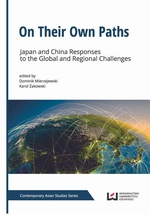
The volume discusses the importance of power shift and dilemmas related to the power transition in East Asia. After the Cold War carne to a close, East Asia has attested profound power shifts resulting from the sudden rise of China. Beijing had already attained the status of a political power in 1971, when it replaced Taipei as a permanent member of the United Nations Security Council, but it is the economic reforms that to a much greater extent decided China’s international position. The path of free-market-oriented changes and opening up to the external world was maintained even after the Tiananmen crackdown in 1989. Since the 1990s Beijing has started displaying an increased assertiveness in foreign policy. China not only exerted pressure on Taipei in the Taiwan Strait crisis in 1995/1996, but also became antagonized with Japan and Southeast Asia n states due to the unshelving of territorial disputes in the East and South China Seas. The balance of power in the region was ever increasingly challenged by China's growing military budget. Moreover, Tokyo was increasingly concerned with the strengthening of anti-Japanese nationalism in China. In 2010 China’s GDP exceeded the one of Japan, which symbolized the transition of the center of power in the region from Tokyo to Beijing.
This item is available online. Expand information to see details.
Dostęp do treści elektronicznej wymaga posiadania kodu PIN. Po odbiór kodu PIN zapraszamy do biblioteki.
The item has been added to the basket. If you don't know what the basket is for, click here for details.
Do not show it again